
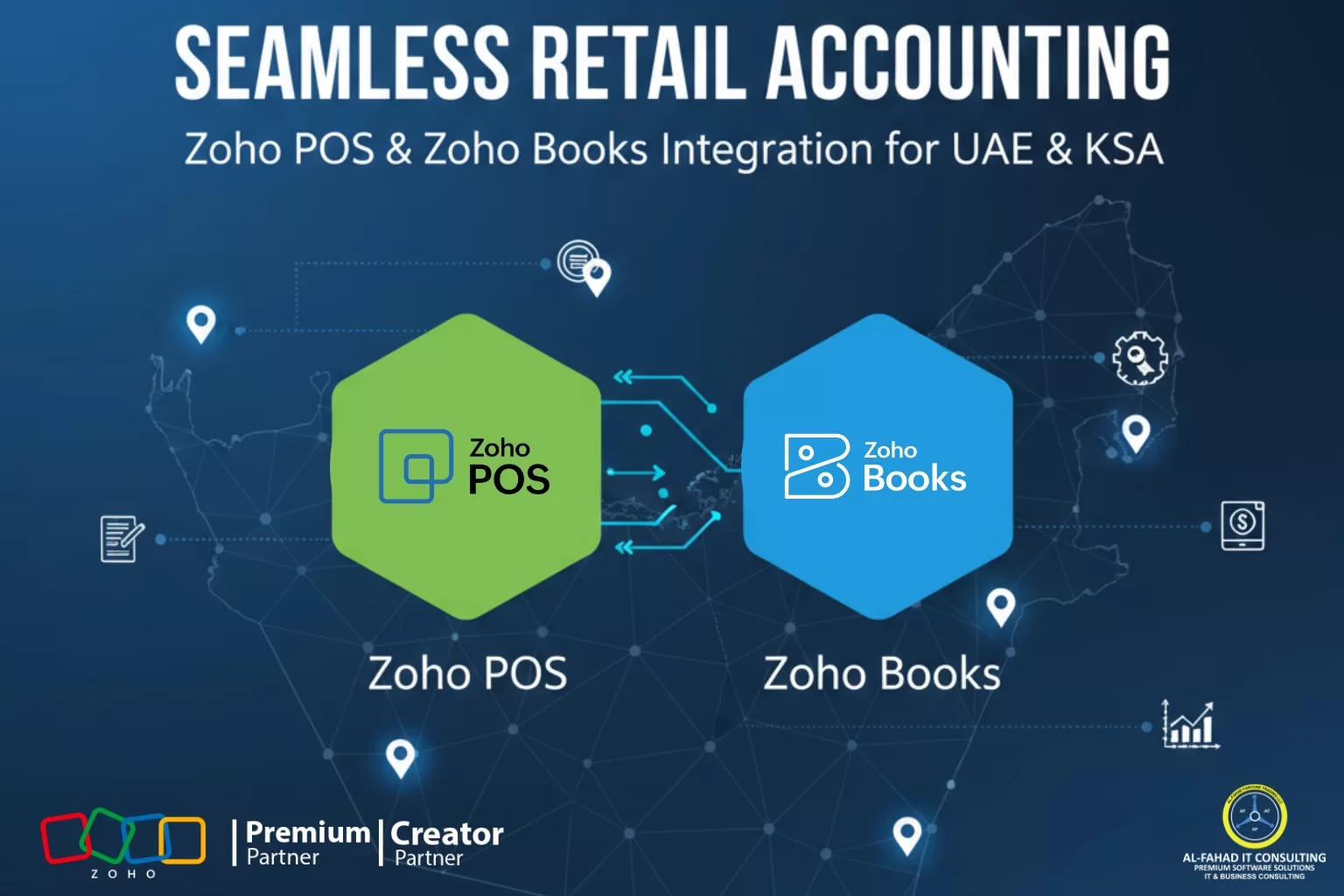
Retail accounting becomes complicated when sales systems and finance tools operate in isolation. Transactions occur at the counter, while accounting teams reconcile figures later using spreadsheets or disconnected software. Delays, mismatches, and manual corrections quickly become part of daily operations.
Zoho POS and Zoho Books were designed to eliminate this friction. When connected, they create a single, reliable financial flow from checkout to accounting. Retailers gain accurate records, faster reporting, and stronger compliance control across the UAE and Saudi Arabia.
This article explains how Zoho POS and Zoho Books work together and why this integration matters for modern retail businesses.
The Accounting Challenges Retailers Face
Retail finance teams operate under constant pressure. High transaction volumes, frequent returns, discounts, and tax calculations introduce complexity that traditional accounting workflows struggle to manage.
Common challenges include:
- End-of-day reconciliation is consuming hours instead of minutes
- Sales data failing to match accounting records
- VAT errors caused by manual data entry
- Delayed visibility into cash flow and profitability
These issues rarely result from a lack of effort. Disconnected systems force teams to fix data rather than use it for decision-making.
How Zoho POS and Zoho Books Work Together
Zoho POS captures every transaction at the point of sale. Zoho Books records financial activity, manages taxes, and produces compliant reports. Integration ensures both systems operate as one.
Each sale, refund, or exchange processed through Zoho POS flows automatically into Zoho Books. Revenue entries, tax calculations, and payment records are updated in real time. Manual data transfers disappear entirely.
Accounting teams gain confidence because reported figures reflect actual activity at the counter.
Accurate VAT Management Across the UAE and Saudi Arabia
VAT compliance remains a priority for retailers operating in GCC markets. Incorrect tax configuration increases audit risk and exposes businesses to penalties.
Zoho Books supports VAT rules for both the UAE and Saudi Arabia. Tax rates are applied automatically at checkout in Zoho POS, ensuring invoices remain accurate and compliant.
Retailers operating multiple outlets benefit from consistent tax handling across all locations, eliminating the need for manual adjustments.
Faster End-of-Day and Month-End Closures
Closing the books should not require extensive reconciliation. Integration between Zoho POS and Zoho Books significantly simplifies this process.
Sales summaries are generated automatically. Cash, card, and digital payments align with accounting records. Refunds and discounts reflect correctly without additional intervention.
Retailers often reduce end-of-day closure time from hours to minutes. Month-end reporting becomes faster and more reliable.
Real-Time Financial Visibility
Retail decisions rely on timely data. Delayed reporting limits responsiveness and weakens cost control.
Zoho Books provides real-time dashboards fed directly by Zoho POS transactions. Revenue, expenses, tax liabilities, and profit margins are always visible.
When combined with Zoho Analytics, retailers gain deeper insights such as category-level profitability and location-based performance.
Reduced Manual Work and Fewer Errors
Manual accounting consumes time and increases the risk of errors. Spreadsheet reconciliation introduces inconsistencies that grow as transaction volume increases.
Zoho POS and Zoho Books automate the entire flow from sale to ledger entry. Data accuracy improves because information is entered once and remains consistent.
Better Control for Multi-Store Retail Operations
Managing accounting across multiple outlets introduces challenges with consolidation. Each store generates data that must roll up accurately.
Zoho Books supports multi-branch accounting, while Zoho POS maintains consistent transaction capture at each location. Centralized reporting eliminates manual consolidation.
Retailers operating in Dubai, Riyadh, and Jeddah retain store-level visibility while maintaining centralized financial control with expert Zoho implementation from Al Fahad IT Consulting.
How Integration Supports Business Growth
Retail growth introduces higher transaction volumes, new outlets, and complex reporting requirements. Systems that do not scale become operational barriers.
Zoho POS and Zoho Books scale naturally as your business grows. New stores integrate quickly, and accounting structures adapt without rework.
When deployed as part of Zoho One, retailers also benefit from integrated HR, inventory, and CRM workflows.
Why Proper Implementation Makes the Difference
Integration delivers results only when configured correctly. Tax rules, chart of accounts, payment mappings, and reporting structures must align with actual operations.
Certified Zoho implementation partner ensures this alignment, tailoring workflows based on store type, location, and compliance requirements. Choose Al Fahad IT Consulting for strategic Zoho Consultation for your businesses in the UAE, Saudi Arabia & Bahrain.
Final Thoughts
Retail accounting should support decisions, not slow them down. Zoho POS and Zoho Books connect sales directly to accounting in real time.
Retailers across the UAE and Saudi Arabia gain clarity, accuracy, and control when these systems operate together. Combined with the wider Zoho ecosystem, this integration provides a strong foundation for efficiency today and scalability tomorrow. Still confused? Here are some detail guides on how Zoho POS solves complex business transactions for business owners in GCC.
- Traditional POS vs. Cloud POS
- Common Challenges Zoho POS Solves
- Top Reasons Why You Need a Zoho POS Implementation Partner
Stay connected to Al Fahad IT Consulting blogs for more information on the Zoho Ecosystem.


Leave a Reply