
Retail operations move fast. Customer expectations are high, inventory turns quickly, and margins leave little room for error. Yet many retailers across the UAE and Saudi Arabia still rely on disconnected systems, manual processes, or outdated point-of-sale software that cannot keep up with modern demands.
The result is familiar: stock mismatches, billing delays, reporting gaps, and frustrated teams. These challenges rarely come from poor strategy; they usually stem from using tools that were never designed to work together. This is where a modern, cloud-based solution like Zoho POS changes the equation, especially when implemented as part of a connected Zoho ecosystem.
This article breaks down the most common POS challenges retailers face and explains how Zoho POS, supported by the wider Zoho platform, helps eliminate them.
1. Inventory Inaccuracies Across Stores
Inventory inconsistency remains one of the biggest pain points for retailers. Stock levels look accurate at the warehouse, but tell a different story at the checkout counter. Popular items show as available but turn out to be out of stock, while slow-moving products quietly pile up without visibility.
The root cause is fragmented systems. Sales data sits in the POS, inventory data lives elsewhere, and updates happen manually or with delays.
Zoho POS solves this challenge by syncing sales transactions in real time with inventory records. When integrated with Zoho Inventory, stock updates occur instantly across stores, warehouses, and online channels. Retail managers gain a single, reliable view of stock movement, enabling timely reordering and smarter purchasing decisions.
This connected approach becomes even more powerful in Zoho One, where inventory, sales, finance, and analytics operate as a single Zoho ecosystem rather than separate tools.
2. Slow Checkout and Billing Errors
Long checkout lines and billing mistakes directly impact customer experience. Manual price entry, incorrect tax calculations, or disconnected payment systems slow down transactions and increase the risk of errors.
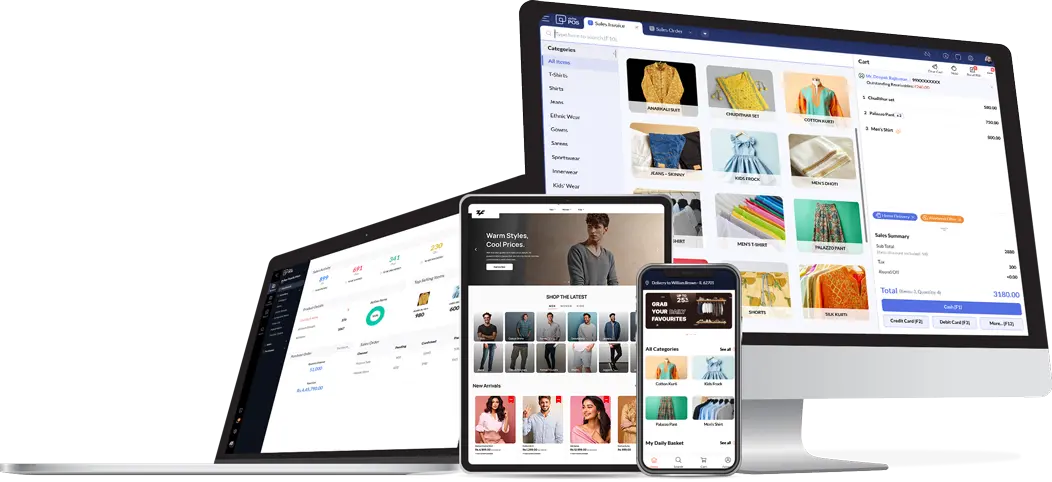
Zoho POS streamlines the checkout process with fast product lookup, barcode scanning, and automated tax configuration. VAT rules for the UAE and Saudi Arabia can be pre-configured, ensuring accuracy on every invoice. Payment methods integrate seamlessly, reducing friction at the counter and speeding up service during peak hours.
When connected to Zoho Books, every sale is automatically recorded in accounting records. Finance teams no longer reconcile POS data at the end of the day because the numbers already match.
3. Lack of Real-Time Sales Visibility
Many retailers operate without clear insight into daily performance. Sales reports arrive late, data lacks accuracy, and decision-making relies on assumptions rather than facts.
Zoho POS provides real-time sales dashboards that track revenue, top-selling items, peak hours, and staff performance. These insights become even more actionable when combined with Zoho Analytics, where managers can compare trends across locations, cities, or regions.
Retailers in Dubai, Riyadh, or Jeddah benefit from instant access to performance data without waiting for end-of-day reports or manual exports. Decisions become proactive instead of reactive.
4. Disconnected Online and Offline Sales Channels
Modern customers expect a seamless experience between physical stores and online shopping. Many retailers struggle to manage this because their traditional POS systems do not integrate with e-commerce platforms.
Zoho POS supports omnichannel retail by integrating with online storefronts and central inventory systems. Products sold online automatically update stock levels in physical stores and vice versa. Pricing, promotions, and product information remain consistent across channels.
When combined with Zoho Commerce and Zoho CRM, retailers gain a complete view of customer behavior, purchase history, and preferences across every touchpoint.
5. Manual Reporting and End-of-Day Reconciliation
Retail teams often spend hours closing the day. Sales figures are exported, spreadsheets are updated, and discrepancies require investigation. This routine drains productivity and increases the risk of errors.
Zoho POS automates daily reporting by generating accurate sales summaries in real time. Reports sync directly with Zoho Books, eliminating manual reconciliation. Store managers close the day faster, while finance teams access clean, audit-ready data without additional effort.
For multi-branch retailers, this automation reduces reporting time by several hours per location per week, freeing teams to focus on operations rather than administration.
6. Limited Scalability as the Business Grows
POS systems that work for one store often fail when a business expands. Adding new branches introduces complexity, data fragmentation, and rising software costs.
Zoho POS scales naturally with business growth. New stores, registers, or users can be added without disrupting existing operations. Centralized configuration ensures pricing, taxes, and products remain consistent across locations.
Inside Zoho One, expansion becomes simpler because sales, inventory, finance, HR, and customer management already operate on the same platform.
7. Poor Integration with Accounting and Finance
Retail finance teams frequently deal with delayed or inaccurate financial data because POS and accounting systems do not communicate properly.
Zoho POS integrates directly with Zoho Books, ensuring every transaction is accurately reflected in financial reports. Revenue, taxes, refunds, and expenses are automatically aligned, improving cash flow visibility and simplifying compliance.
Retailers operating in Saudi Arabia benefit from cleaner records that support ZATCA reporting requirements, while UAE businesses maintain VAT accuracy without manual intervention.
8. Low Staff Adoption and Training Challenges
Even the most advanced POS system fails if staff find it difficult to use. Complex interfaces slow onboarding and increase mistakes at the counter.
Zoho POS offers a clean, intuitive interface designed for frontline staff. Training time is significantly reduced, and new employees adapt quickly. When supported by a certified Zoho implementation partner, retailers also receive structured onboarding and workflow customization tailored to their operations.
Why Zoho POS Works Better as Part of the Zoho Ecosystem
Zoho POS delivers its greatest value when connected to the wider Zoho platform. Sales data flows into Zoho CRM to enrich customer profiles. Financial records sync with Zoho Books. Inventory stays aligned through Zoho Inventory. Performance insights surface through Zoho Analytics.
This ecosystem approach removes silos and creates a single source of truth across retail operations. Instead of managing multiple tools, teams work from one connected system that grows with the business.
Only a Zoho Premium Partner with an established portfolio can create a self-sustaining Zoho ecosystem that provides scalability and support. Choose Al Fahad IT Consulting for end-to-end POS integration into your current or new Zoho Ecosystem.
Important: You don’t have to remove your current ERP; Zoho can also integrate into your current setup. Contact us for strategic Zoho consultation for your businesses in the UAE, Saudi Arabia & Bahrain.
Final Thoughts
POS challenges rarely exist in isolation. Inventory issues affect sales. Billing errors impact finance. Poor reporting limits growth decisions. Solving these problems requires more than replacing a cash register; it requires a connected retail system.
Zoho POS addresses these challenges by combining speed, accuracy, and scalability within a modern cloud platform. When implemented alongside other Zoho applications, it becomes a powerful foundation for retail growth across the UAE and Saudi Arabia.
Retailers who invest in the right POS strategy today position themselves for smoother operations, happier customers, and stronger margins tomorrow.


Leave a Reply