
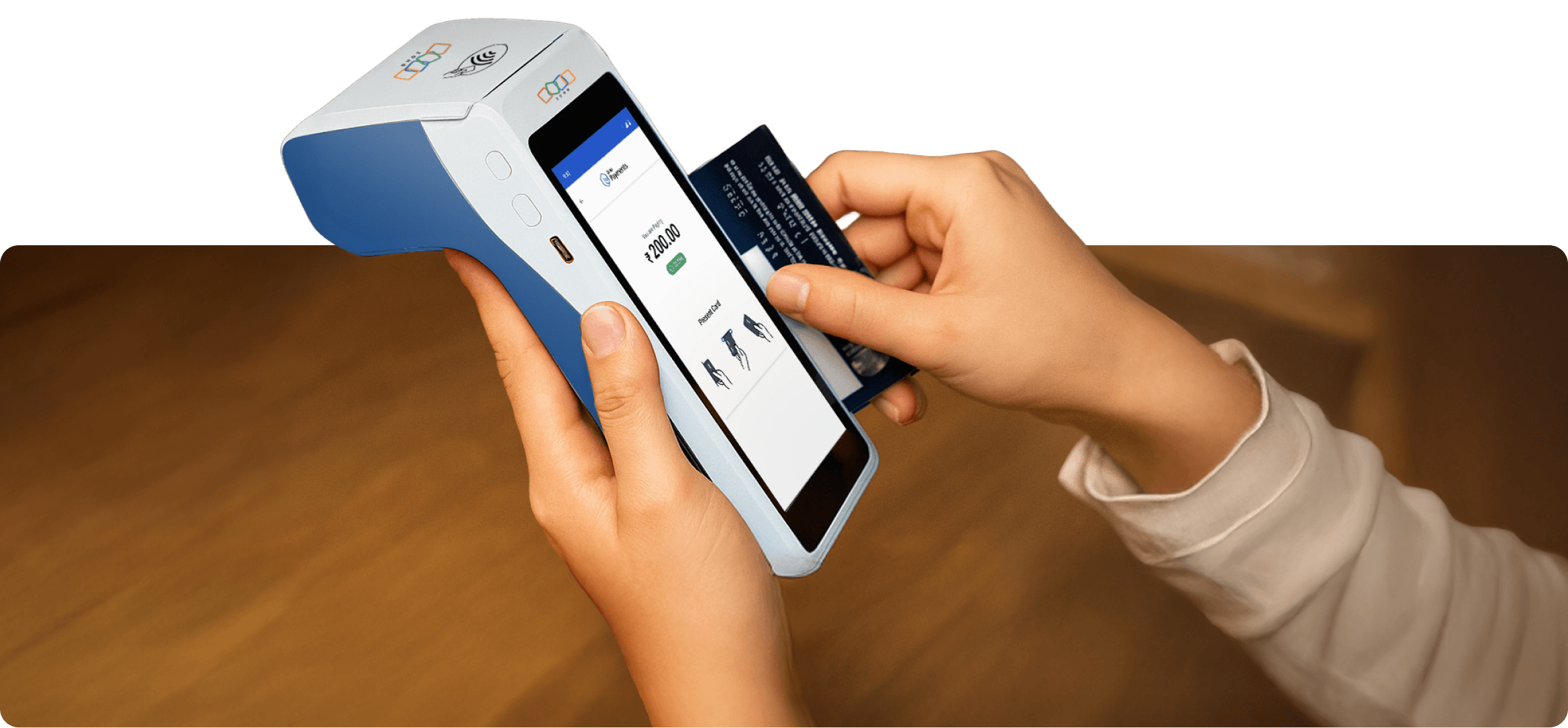
Cloud POS software has become the preferred operating model for retail and hospitality businesses across Saudi Arabia, the UAE, and Bahrain. Decision-makers evaluating POS platforms today are no longer comparing features alone. The comparison centers on cost control, scalability, operational visibility, and the ability to manage distributed outlets without increasing overhead.
This guide compares cloud-based POS systems with traditional on-premise POS solutions, explaining why Zoho POS aligns more closely with the operational and regulatory realities of GCC businesses.
Cloud POS vs Traditional POS: A Strategic Comparison
POS architecture determines how easily a business can scale, maintain compliance, and retain control as operations grow.
Traditional POS systems were designed for single-location environments with localized data storage and manual oversight. Cloud POS platforms are built for centralized control, real-time visibility, and remote management across multiple outlets.
Understanding this difference is critical at the evaluation stage.
Cost Comparison: Upfront Investment vs Controlled Operating Costs
Cost structure remains one of the most visible differences between cloud POS software and traditional POS systems.
Traditional POS deployments typically require significant upfront investment in servers, local infrastructure, licensing, and maintenance. Ongoing costs increase as new locations are added or hardware requires upgrades.
Cloud POS platforms such as Zoho POS shift this model to predictable operating costs. Infrastructure, updates, and security are managed centrally, reducing capital expenditure and long-term maintenance burden.
For growing GCC businesses, this cost predictability supports better financial planning and expansion decisions.
Scalability: Supporting Multi-Outlet Growth Without Rework
Scalability determines whether a POS system can support business growth without disruption.
Traditional POS systems often require new servers, configurations, and manual setup for each additional outlet. This approach introduces delays and increases the risk of inconsistent configurations.
Zoho POS supports centralized configuration and rapid outlet onboarding. New locations can be added without rearchitecting the system, allowing businesses to scale across cities or countries with minimal operational friction.
Remote Management: Centralized Control Across Locations
Remote management capability separates modern cloud POS software from legacy systems.
Traditional POS platforms typically require on-site access for updates, troubleshooting, and reporting. This dependence increases response times and operational costs.
Zoho POS enables centralized monitoring, configuration, and reporting from a single interface. Management teams can oversee pricing, inventory, and performance across all outlets without physical presence.
Multi-Branch Visibility: Real-Time Data for Better Decisions
Visibility across branches directly affects inventory accuracy and financial reporting.
Traditional POS systems often store data locally, leading to delayed consolidation and inconsistent reporting. Decision-makers receive information after operational issues have already occurred.
Zoho POS provides real-time visibility across branches, enabling accurate inventory tracking, consolidated sales reporting, and faster decision-making at both operational and executive levels.
Why Zoho POS Is Future-Ready for GCC Businesses
Future-ready POS platforms must support expansion, compliance, and integration without operational disruption.
Zoho POS is designed to operate as part of a broader business system rather than a standalone tool.
Native integration with finance, inventory, and reporting platforms enables Zoho POS to support compliance requirements, maintain operational control, and enable long-term scalability. Cloud architecture ensures continuous updates, security governance, and accessibility aligned with GCC regulatory expectations.
Comparison Table: Cloud POS vs Traditional POS vs Zoho POS
The table below highlights practical differences that matter during POS evaluation.
| Evaluation Area | Traditional POS | Generic Cloud POS | Zoho POS |
| Deployment model | On-premise servers | Cloud-hosted | Cloud-native |
| Upfront cost | High hardware and setup cost | Moderate subscription cost | Predictable subscription cost |
| Ongoing maintenance | Manual updates and local IT dependency | Vendor-managed | Fully vendor-managed |
| Scalability | Requires reconfiguration per outlet | Scales with effort | Scales centrally without rework |
| Multi-branch visibility | Limited, delayed consolidation | Near real-time | Real-time, centralized |
| Remote management | Minimal | Available | Built-in and centralized |
| Integration with finance and inventory | Custom or manual | Limited | Native integration |
| Compliance readiness (GCC) | Depends on customization | Varies by vendor | Designed for GCC compliance |
| Reporting and decision-making | Delayed | Faster | Real-time, executive-ready |
When Should a Business Move from Traditional POS to Cloud POS?
Migration decisions are usually driven by operational strain rather than technology preference.
Migration typically becomes necessary when manual reconciliation increases, reporting delays affect decision-making, or multi-outlet expansion strains existing systems.
Cloud POS adoption addresses these challenges by centralizing control and improving data reliability.
Deployment Speed and Time to Value
Deployment speed affects how quickly a business realizes operational benefits from a new POS platform.
Traditional POS implementations often require hardware procurement, on-site configuration, and sequential rollout. Cloud POS platforms reduce deployment timelines through centralized setup and standardized configurations.
Zoho POS enables faster rollout across outlets without compromising control or consistency.
Data Accuracy and Transaction Integrity
POS accuracy directly influences financial reporting and inventory reliability.
Traditional systems rely on batch uploads or manual consolidation, increasing the risk of discrepancies. Cloud-based platforms maintain continuous synchronization, improving transaction integrity.
Zoho POS ensures transactional data remains consistent across sales, inventory, and finance.
Offline Operations and Business Continuity
Business continuity depends on how POS systems handle connectivity interruptions.
Modern cloud POS platforms support offline transaction capture with controlled synchronization. Traditional systems lack standardized recovery mechanisms.
Zoho POS maintains operational continuity through structured offline and sync handling.
Security, Access Control, and Governance
Security posture determines whether POS platforms can scale without increasing risk exposure.
On-premise systems depend heavily on local controls and manual oversight. Cloud POS platforms centralize security policies and access management.
Zoho POS supports role-based access and centralized governance aligned with enterprise requirements.
Integration with Accounting and Business Systems
POS integration determines whether financial and operational data can be trusted.
Disconnected systems introduce reconciliation overhead and reporting delays. Integrated platforms reduce manual effort and improve accuracy.
Zoho POS integrates natively with finance and inventory systems, supporting a single source of truth.
Compliance Readiness for GCC Regulations
Compliance readiness affects audit outcomes and regulatory confidence.
Traditional POS systems often require custom modifications to meet evolving regulations. Cloud-native platforms adapt more consistently.
Zoho POS is designed to align with GCC compliance requirements through standardized workflows.
Suitability for Retail vs F&B Operations
Operational requirements vary significantly between retail and hospitality environments.
POS platforms must handle pricing models, inventory flows, and transaction volumes specific to each sector.
Zoho POS supports configurable workflows suitable for both retail and F&B use cases.
Total Cost of Ownership Over Five Years
Initial cost rarely reflects long-term financial impact.
Traditional POS systems accumulate maintenance, upgrade, and support costs over time. Cloud POS platforms provide clearer long-term cost visibility.
Zoho POS offers predictable cost structures aligned with growth plans.
Vendor Reliability and Product Roadmap
Vendor stability influences long-term system viability.
POS platforms should demonstrate consistent product investment and alignment with their ecosystems.
Zoho POS benefits from an active development roadmap within a broader business platform.
Next Step: POS System Assessment for GCC Businesses
A structured POS assessment by a Zoho Premium Partner evaluates cost structure, scalability limitations, and visibility gaps within the current setup.
The outcome provides clarity on whether cloud POS adoption, optimization, or integration with wider business systems is required. Al Fahad IT Consulting provides end-to-end Zoho implementation and consultation services for retail businesses in the UAE, Saudi Arabia & Bahrain.
Common Questions Businesses Ask When Evaluating Cloud POS Software
Decision-makers consistently raise the following questions during POS evaluations.
Is cloud POS software secure for retail and F&B operations?
Security depends on governance, access controls, and vendor accountability rather than the deployment model.
Can cloud POS handle multi-country or multi-city operations?
Cloud-native platforms support centralized control across locations when designed for scale.
Does cloud POS increase dependency on internet connectivity?
Offline capabilities and synchronization design determine resilience during connectivity interruptions.
How difficult is it to migrate from a traditional POS system?
Migration complexity depends on data structure, integrations, and process redesign rather than software alone.


Leave a Reply