
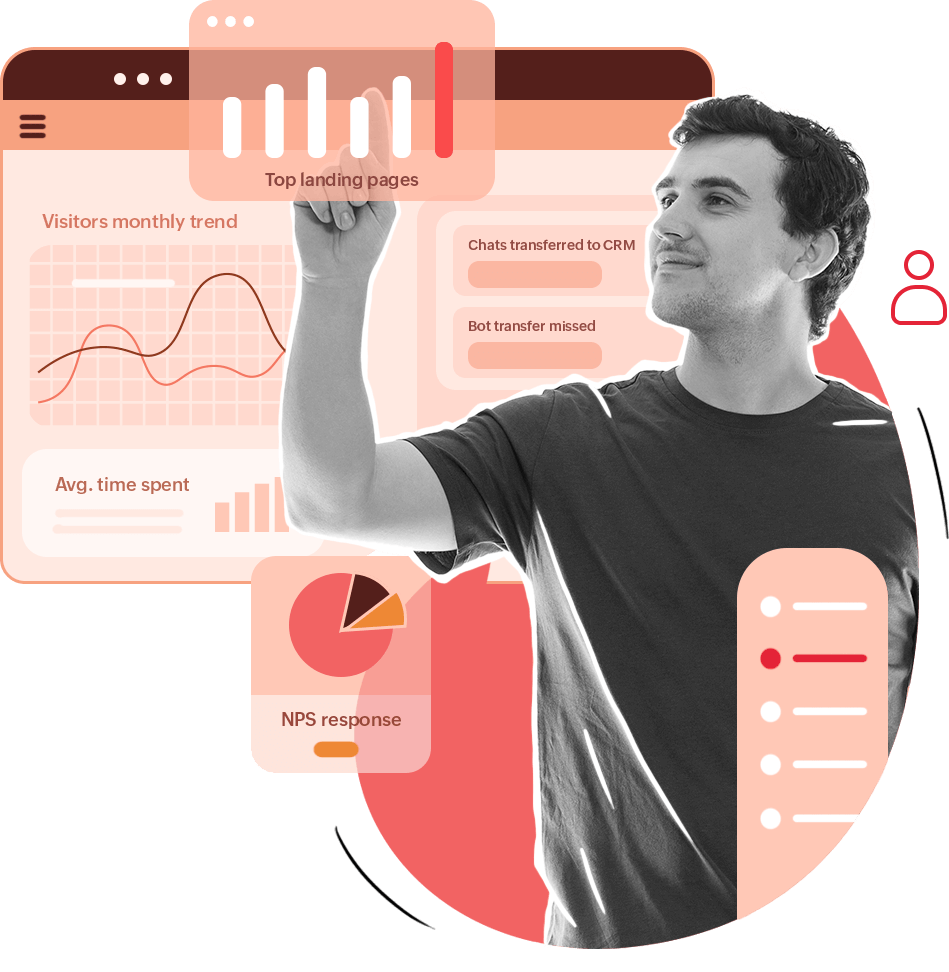
Zoho Analytics is widely adopted by organizations that have outgrown static reports and disconnected dashboards. Leadership teams evaluating analytics platforms usually reach a common realization: data exists across systems, but insight does not.
At this stage, questions move beyond data analytics to focus on how analytics improves decision-making, performance, and risk management across the business.
What Data Analytics Means for Modern Organizations
Data analytics refers to the process of examining raw data to uncover patterns, trends, and insights that support decision-making. In practical terms, analytics converts operational data into management visibility.
Executives often search for:
- Analytics to understand performance
- Data analytics for managers to guide decisions
- Performance analytics to measure outcomes
Without a structured platform, analytics remains fragmented and reactive.
Why Analytics Has Become a Strategic System, Not a Reporting Tool
Modern organizations generate large volumes of data across ERP, CRM, finance, HR, and operational platforms. This creates the need for big data and analytics approaches that consolidate, analyze, and visualize information at scale.
Disconnected reports fail because:
- Data lives in silos
- Metrics lack consistency
- Insights arrive too late
A centralized analytics software platform addresses these gaps.
How Zoho Analytics Approaches GCC Business Analytics
Zoho Analytics is a unified business analytics platform that connects data sources, models relationships, and delivers insights through dashboards and reports.
The platform supports:
- Descriptive analytics for historical insight
- Diagnostic analytics for root-cause analysis
- Predictive analytics for forward-looking decisions
This layered approach supports both operational and strategic use cases.
12 Practical Reasons Organizations Choose Zoho Analytics
The following section highlights the top 12 practical reasons organizations in the UAE, Saudi Arabia & Bahrain choose Zoho Analytics for data visualization and insights.
1. Centralized Data Analytics Across the Organization
Zoho Analytics consolidates data from multiple systems into a single analytical environment. Finance, operations, sales, and leadership operate from shared metrics.
Operational impact:
Decision-making improves when leadership relies on one version of the truth.
2. Cloud Analytics Without Infrastructure Complexity
Zoho Analytics operates as a cloud analytics platform, removing dependency on on-premise infrastructure.
Operational impact:
Teams access insights securely without IT bottlenecks.
3. Big Data Analytics in Cloud Computing Environments
The platform supports big data analytics in cloud computing, handling large datasets without performance degradation.
Operational impact:
Growing data volumes do not compromise reporting speed or reliability.
4. Cloud-Based Big Data Analytics for Scale
As a cloud-based big data analytics solution, Zoho Analytics scales with transaction volume and data complexity.
Operational impact:
Analytics maturity grows alongside the business.
5. Predictive Analytics for Forward-Looking Decisions
Zoho Analytics supports predictive analytics using statistical models and trend analysis.
Operational impact:
Leadership anticipates outcomes instead of reacting to them.
6. Predictive Analytics Solutions for Asset Management
Use cases such as predictive analytics and asset management analytics help organizations monitor asset utilization, maintenance cycles, and performance risk.
Operational impact:
Asset downtime and inefficiency are reduced through proactive planning.
7. Performance Analytics for Management Visibility
Dashboards track KPIs across departments, supporting performance analytics for executives and managers.
Operational impact:
Management conversations shift from opinions to evidence.
8. Data Analytics in Project Management
Zoho Analytics supports data analytics in project management by tracking timelines, cost variance, resource utilization, and delivery performance.
Operational impact:
Project overruns become visible early rather than after delivery.
9. Industry-Specific Analytical Solutions
Zoho Analytics can be configured as an analytical solution for sectors such as healthcare, finance, and operations. Use cases include healthcare analytics solutions for patient data, utilization, and compliance reporting.
Operational impact:
Industry-specific insights improve regulatory and operational outcomes.
10. Business and Customer Analytics Software
Zoho Analytics functions as customer analytics software, tracking customer behavior, engagement trends, and lifetime value.
Operational impact:
Sales and marketing decisions align with real customer data.
11. Predictive Analytics Software Without ERP Overhead
Organizations seeking predictive analytics software often avoid heavy enterprise platforms. Zoho Analytics provides predictive capability without ERP complexity.
Operational impact:
Advanced analytics becomes accessible to mid-market teams.
12. Broad Analytics Software Use Cases
Zoho Analytics supports diverse use cases, including:
- Video analytics software integrations
- Operational reporting
- Financial dashboards
Operational impact:
One platform supports multiple analytical needs.
Zoho Analytics vs Other Market Alternatives
Organizations often compare Zoho Analytics with platforms such as SAP Analytics Cloud or standalone tools like the SAP Analytics Cloud app.
Zoho Analytics differs by offering:
- Faster deployment
- Lower operational overhead
- Greater flexibility for mid-market use cases
This balance makes it suitable for organizations that need insight without the complexity of an enterprise.
Understanding Analytics in a Multilingual Context
Search interest, such as Google Analytics بالعربي, highlights the need for analytics platforms that remain accessible across regions and teams. Zoho Analytics supports intuitive interfaces that reduce dependency on specialized technical skills.
Why Choose Al Fahad IT Consulting
Al Fahad IT Consulting delivers analytics implementations across the GCC with a consulting-led approach.
Analytics Strategy Before Dashboards
Key metrics, decision points, and management questions are defined before system configuration.
Data Modeling and Governance
Data relationships and validation rules ensure accuracy and trust.
Predictive and Performance Analytics Design
Models are aligned with real business scenarios, not theoretical use cases.
Ongoing Analytics Optimization
Dashboards evolve as business priorities change.
Conclusion
Zoho Analytics provides a structured, scalable approach to data analytics for organizations seeking clarity, foresight, and control. The platform supports everything from big data analytics software to predictive and performance analytics without unnecessary complexity.
Long-term value depends on how analytics is designed, governed, and adopted across the organization.
Frequently Asked Questions
What is Zoho Analytics used for in a business environment?
Zoho Analytics is used to convert operational, financial, and customer data into structured insights that support decision-making. Organizations use it for data analytics across sales, finance, operations, projects, and asset management to improve visibility and accountability.
How is Zoho Analytics different from basic analytics or reporting tools?
Basic analytics tools focus on historical reporting. Zoho Analytics supports descriptive, diagnostic, and predictive analytics, allowing organizations to understand past performance, identify root causes, and forecast future outcomes within a single platform.
Can Zoho Analytics handle big data analytics and cloud-based workloads?
Zoho Analytics supports cloud analytics and big data analytics in cloud computing environments. Large datasets can be processed and visualized without performance degradation, making it suitable for growing organizations that generate high volumes of data.
Is Zoho Analytics suitable for managers and non-technical users?
Yes. Zoho Analytics is widely used for data analytics by managers due to its intuitive dashboards, natural-language queries, and role-based access controls. Decision-makers can interpret performance analytics without relying heavily on technical teams.
Why involve a consulting partner when implementing Zoho Analytics?
Analytics platforms fail when data modeling, metric definitions, and governance are overlooked. A consulting partner ensures analytics align with business questions, predictive analytics solutions reflect real scenarios, and dashboards remain trusted and adopted over time.


Leave a Reply